
An exchange between My Senator and I about GMOs and food safety..
On May 28, 2009, at 6:31 AM, <senator@feinstein.senate.gov> <senator@feinstein.senate.gov> wrote:
Dear Mr. Saunders:
Thank you for writing to express your views on the “Global Food Security Act of 2009” (S. 384). I appreciate hearing from you on this legislation and welcome the opportunity to respond.
Like you, I believe that Congress must maintain its commitment to a robust foreign aid package designed to help develop and maintain effective food security programs worldwide. Please know that I understand and have noted your concerns about the development of genetically modified food as a means to provide for global food security.
As you may know, on March 31, 2009 the Senate Committee on Foreign Relations favorably reported S. 384 to the full Senate for consideration. Be assured that I have noted your views on how best to further global food security, and will keep your views in mind should the Senate have the opportunity to debate this bill.
Again, thank you for writing. I hope that you will continue to write on matters of importance to you. Should you have any further comments or questions, please feel free to contact my Washington, D.C. office at (202) 224-3841. Best regards.
Sincerely yours,
Dianne Feinstein
United States Senator
Further information about my position on issues of concern to California and the Nation are available at my websitehttp://feinstein.senate.gov/public/. You can also receive electronic e-mail updates by subscribing to my e-mail list at http://feinstein.senate.gov/public/index.cfm?FuseAction=ENewsletterSignup.Signup.
Dear Senator,
Thanks for your reply.
As for your statement which I am perceiving as a “hinting” without verbally committing to the position of being in SUPPORT of Genetically Modifying Organisms in dangerous and wreckless ways before feeding them to ourselves despite scientific evidence and a great deal of it that suggests that it is endangering to human health and safety to do so? As a public leader it seems that you hold a tenuous position of balance between individual human rights concerns and corporate interests, and possibly without enough time to fully research the information required to make a fully responsible decision about the issue, you have my empathy on that if it is the case. It is on this issue that I urge you to draw the line on the side of human rights concerns, many of your constituency have researched enough to know that GMOs for food is a dangerous proposition, and only valuable to those who would seek to harm human life, justifying the act with statistics, and junk-science. When this comes up on the floor for debate, what will your position be on the issue of GMO’s? You reply that you have noted mine, and neglected to inform me of your position. Am I mistaken in my assumption that you and I have differing views on this issue?
As always, I appreciate you and your efforts,
Stephen Saunders
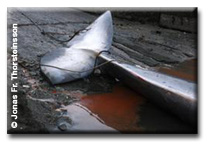 On June 22, over 80 governments from around the world will meet at the International Whaling Commission (IWC) meeting to decide the future of the world’s whales. A global ban on commercial whaling that has held strong for over 25 years is in danger of being revoked – which means whales around the world could once again be subjected to terrible suffering and agonizing deaths.
 HFCS. As scientists learn more about the problems associated with HFCS, more consumers are seeking products with traditional fruit sugars or sucrose table sugar. The ever powerful corn lobby and its associated industry trade groups have responded by launching an aggressive advertising campaign claiming HFCS is as safe as its natural competitors. But new studies confirm previous studies and indicate a diet high in fructose, as compared to glucose, gained more of the dangerous belly fat that has been linked to a higher risk for heart attack and stroke.
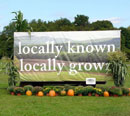 The local food movement is gaining enough popularity to capture the interest of big business. Some of the biggest corporate food companies are looking for ways to greenwash their products. Although it sure beats sourcing their crops from overseas and is a step in the right direction, the following marketing claims can be misleading since the actual processing of these often factory-farm grown products may be anything but local:
 without paying any premium, organic soy foods that truly meet their expectations.”