
WHERE BAD EDUCATION REALLY COMES FROM

Sam Smith

Even liberals and Democratic presidents are placing an inordinate amount of blame on teachers for the state of public education, adopting the classic right wing practice of attributing the faults of a system to its weakest elements, in this case teachers and students This distracts from such issues as who is responsible for running schools, who designs the curriculum, who chooses and trains the teachers, the size of classes, budgeting, how much we pay teacher, the economy’s need for graduates and so forth. Besides, those making such claims never offer proof that the percentage of bad teachers has really changed all that much over time.

What is causing this obsession parading as public education reform? Among the factors:

– A generally unstated awareness that American culture is in decline and the assumption that poor education may be responsible.

– The huge profits available through changes in educational policy such as more testing. Not only are testing companies helped, but also publishers of materials that help students pass tests. More than a few of these firms have strong political connections. Here’s just one example:

NY Times – Citizens for Responsibility and Ethics in Washington detailed at least $1 million in spending from the No Child Left Behind program by school districts in Texas, Florida and Nevada to buy products made by Mr. Bush’s company, Ignite Learning of Austin, TX. . . Ignite, founded by Neil Bush in 1999, includes as investors his parents, former President George H. W. Bush and his wife, Barbara. Company officials say that about 100 school districts use the Curriculum on Wheels, known as the Cow, which is a portable classroom with software to teach middle-school social studies, science and math. The units cost about $3,800 each and require about $1,000 a year in maintenance. . . The citizens’ group obtained documents through a Freedom of Information Act request showing that the Katy Independent School District west of Houston used $250,000 in state and federal Hurricane Katrina relief money last year to buy the Curriculum on Wheels.

– The desire to sell public schools located on valuable urban land to developers. This has been a factor in DC, Chicago and elsewhere.

– The desire to create tax supported targeted education for those members of the future elite who can’t afford to go to private schools. Charter schools and vouchers are designed to discover which members of the underclass are worth elevating to higher status, while leaving the rest in less favored public schools.

– Technocratic control obsession: Liberalism has grown less and less interested in direct action that helps large numbers of people – such as food stamps, social security and minimum wage – and more and more infatuated with control and direction based on an assumption of technocratic expertise. Thus, in the Obama administration, we have federal control of medical record keeping and a desire to assume far great control over schools. This is in opposition with a couple of centuries of American belief in local schools and with the fact that schooling is, at its core, a largely personal matter involving teacher and a student for which technocratic control or corporate reorganization offers little aid and easily interferes. It is also worth noting that typically those claiming expertise and control are far less skilled in education and teaching than many they wish to control.

– Political and media spawned myths about public education. For example, few Americans would be aware from the news that, between 1972 and 2005, average SAT verbal SAT scores have declined all of 4.2 percent. Math scores have increased 2.2 percent. This is not good, but neither does it point to a new crisis” In fact, these scores bottomed out in the early 1990s and have been rising since, albeit slowly.

Between 2003 and 2007 – when Obama’s education secretary, Arne Duncan, was running the Chicago schools – fourth grade math scores in that city rose 6 points, or less than three tenths of a percent. The scores in Chicago rose only 2 more points than in the state of Illinois at large. Eighth grade math scores rose 5 points in Chicago and 7 points nationwide between 2003 and 2007.

The Chicago Tribune reported in October 2008, shortly before Duncan was appointed, that:

“The percentage of Chicago public high school students who met or exceeded state standards on a test tied to the ACT college-entrance exam dropped for the third consecutive year, according to scores released Friday.”

And how did Duncan respond? In the best bureaucratic manner: “We believe the new PSAE scores are different from the old ones and that valid comparisons between 2008 data and previous years cannot be made.”

Reported the Trib, “Matt Vanover, a spokesman for the State Board of Education, said federal officials reviewed the new scoring and found it to be comparable to that of previous years.” But no matter, if the scores are good, take the credit. If they’re not good challenge their basis.

Duncan – like DC’s school chancellor Michelle Rhee – has fostered a dysfunctional rightwing, corporatized system of education that not only isn’t working, it is damaging our children as it trains them to be obedient worker-drones incapable of analyzing or understanding what is really going on about them. The dangers of this system include:

– Teaching our children only to give the right answers and not to ask the right questions.

– Grossly limiting education to fact accumulation and basic manipulation of data, leaving little time for analysis, creativity, judgment, philosophy, gaining social intelligence, as well as learning about, and participating in, the non-mechanical aspects of life such as art, theater and music. This system deliberately teaches our children not to think.

Even that poster child of the left behind – the DC school system – provides a curious mixture of facts if you bother to look at them. For example, it’s true that DC is at or near the bottom in SAT scores. But again, if you look at test scores over time, you find things like this: while Connecticut’s 8th grade math scores went up one point between 2000 and 2007, DC’s went up 13 points. In reading, between 1990 and 2007, Connecticut’s declined 5 points while DC’s went up five points. According to the logic of the faux school reformers, we probably should close Connecticut’s schools and sell them all to developers.

One of the reasons technocrats like test scores so much is that it saves them the trouble of dealing with the complexities of real education. They parade seemingly objective numbers (and hide them when they’re not favorable) and strut around with a overblown media status driven by public relations rather than experience and fact.

One of the reasons I don’t like test score obsession is because I went through fourth grade at a DC public school that never would have passed the standards of today’s self-proclaimed reformers. We had 160 kids with four teachers, two of them maiden sisters known by everyone as the thin Miss Waddy and the fat Miss Waddy. The school lacked special programs and we undoubtedly took up too many square feet to be truly educationally efficient. Nonetheless, out of this failure came a dean of Catholic University, a foreign correspondent for a major newspaper, an urban planning professor and an irrepressible independent journalist, just to name a few from my period – proving once again that in education, objective standards often don’t cut it. What’s happening in that square footage of whatever size, and who’s doing it, is what really matters

For another example, one of the schools targeted for closing by DC school chancellor Michelle Rhee was in a heavily black neighborhood. The school, John Burroughs, put up a web site to help in its fight against closure. On it you could learn that this school the city wanted to shut down is:

– One of five Middle States accredited elementary schools in DC
– Meets federal requirements in reading and math
– Placed first in the city’s black history contest
– Has a scout program, cheerleaders and a ski club
– Ranks 15th citywide in reading and 12th in math

There is no standardized test in the world that will tell you how good the two Miss Waddys were or that John Burroughs school has a ski team and that both these facts really matter.

There are a million things standardized tests won’t tell you. Like the time I was speaking to more than a hundred public school students visiting DC from Oklahoma City and ten minutes into the talk a heavy set black girl stood up and raised her hand. Her question: “Excuse me, Mr. Smith, but I didn’t get your last point. Could you explain it again?” I wanted to say to her, “Who taught you to have the courage to do that because I want to go hug them.”

Another time, I knew whom to hug: a friend of mine who taught conflict resolution in the DC schools. One of her students was on a bus when a woman stepped aboard and got into an argument with the driver. The 14 year old student walked to the front of the bus and said, “Excuse me, but I’ve been trained in mediation. Can I help?”

Again, there is no test for that.

To improve our schools we must first change the way we think about them. We have been trapped into a technocratic mythology that is hard to escape since it has also enthralled the media. But here is a list of things that are important to consider and act upon before we spend another dime on more tests or close another school:

The need to need the young

It is commonly said that one needs a good education in order to get a good job. But it is also true that in order to have good schools, one needs good jobs. Educational systems rise and fall in response to the economy they serve.

A dramatic example occurred at the beginning of World War II. During the Depression years there was an assumption that many of the jobless were either too dumb or too lazy to find employment. After Pearl Harbor, however, such assumptions collapsed. America needed everyone and in schools, factories, and the military the allegedly uneducable suddenly were able to learn.

Today there is an assumption that many of the urban jobless are either too dumb or too lazy to find employment. But unlike during World War II, this assumption is not being tested because we simply don’t need everyone any more. Instead we have let the social triage of race and class takes its course.

When fifty percent of a city’s welfare recipients have a high school diploma, there is a strong hint that something is very wrong other than the educational system. Further, the word gets around. Politicians and the media may have abstract fantasies about the value of education; kids tend to be a bit more realistic.

So the most important first step towards a better urban school system is a better urban economy. The second step is to stop treating our young as an accident or crime waiting to happen and to begin respecting, helping and needing them. We could, for example, use older students more as tutors and teachers of younger kids. We could use high schoolers as community organizers.

We could even teach students to become emergency medical technicians and community social service aides. Imagine if every urban high school had an emergency squad that was not only medically trained but was able to provide assistance to the elderly and infirm of the community and help staff clinics, schools, and recreation centers. With a classy uniform, good training and equipment (along with a few perks like being on call on a rotating basis during the class day), schools and communities might find themselves with some impressive new role models. Can’t be done? Well, it has been. On one Indian reservation, a high school developed its own search & rescue squad, which has become a well-regarded part of the area’s emergency services.

Recreation

Tara Parker-Pope, NY Times – A study published in the journal Pediatrics studied the links between recess and classroom behavior among about 11,000 children age 8 and 9. Those who had more than 15 minutes of recess a day showed better behavior in class than those who had little or none. Although disadvantaged children were more likely to be denied recess, the association between better behavior and recess time held up even after researchers controlled for a number of variables, including sex, ethnicity, public or private school and class size. . . In the Pediatrics study, 30 percent were found to have little or no daily recess. Another report, from a children’s advocacy group, found that 40 percent of schools surveyed had cut back at least one daily recess period. . . Last month, Harvard researchers reported in The Journal of School Health that the more physical fitness tests children passed, the better they did on academic tests. The study, of 1,800 middle school students, suggests that children can benefit academically from physical activity during gym class and recess. A small study of children with attention deficit hyperactivity disorder last year found that walks outdoors appeared to improve scores on tests of attention and concentration. Notably, children who took walks in natural settings did better than those who walked in urban areas, according to the report, published online in August in The Journal of Attention Disorders. The researchers found that a dose of nature worked as well as a dose of medication to improve concentration, or even better. In another study of children who live in public housing, girls who had access to green courtyards scored better on concentration tests than those who did not. . .

The corporatization of public schools

Bill Kauffman, writing in Chronicles, argued that one of the most deleterious changes in public education has been the increase in school — rather than class — size. Kauffman notes that this was intentional, led by people such as Harvard President James Conant who produced a serious of postwar reports calling for the “elimination of the small high school” in order to compete with the Soviets and deal with the nuclear era. Says Kauffman, “Conant the barbarian triumphed: the number of school districts plummeted from 83,718 in 1950 to 17,995 in 1970.”

One of the results of this is a redefinition of the many principals’ jobs from being a school’s leading educator to being part CEO and part warden.

Schools as part of a community

Part of the corporate education mentality of people like Arne Duncan and Michelle Rhee is that they have no appreciation for the role of community in education. As Duncan put it: “I am not a manager of 600 schools. I’m a portfolio manager of 600 schools and I’m trying to improve the portfolio.”

They close schools based on a MBA’s sense of efficiency, without considering the immeasurable importance of having a community involved in a school and the children learning the importance of community.

The new approach is damaging communities by closing schools that not only served students but their parents and provided commonality in ever more atomized urban areas.

The importance of language

One of the most important things students should be doing is using language more. Writing something every day, not to pass tests, but to learn how to express themselves and use words in dealing with others. It doesn’t matter all that much what you write – it can be poetry, ads, diaries or screeds – but the use of language as a central part of education is essential,.

Back in 1989, Shirley Brice Heath wrote in the American Psychologist of her work looking at the shifts in the in the oral and literate traditions among black Americans living in poverty and how this affected their education:

“In a comparative study of black dropouts and high school graduates in Chicago, those who graduated had found support in school and community associations, as well as church attendance; 72% of the graduates reported regular church attendance whereas only 14% of the dropouts did. Alienation from family and community, and subsequently school, seems to play a more critical role in determining whether a student finishes high school than the socioeconomic markers of family income or education level. . .

“For the majority of students that score poorly on standardized tests, the school offers little practice and reward in open-ended, wide-ranging uses of oral and written language. . . Yet such occasions lie at the very heart of being literate: sharing knowledge and skills from multiple sources, building collaborative activities from and with written materials, and switching roles and trading expertise and skill in reading, writing and speaking.”

Charter schools

Either charter schools work or they don’t. If they don’t, you don’t want them. If they do, then their use inherently creates a two track school system with the public schools reduced to what known to be called in DC as pauper schools.

Charter school advocates claim that their schools are open to all, but while this may be true, it’s not as important as one might think. A door that is open is not automatically entered. And the child of a poor but ambitious or caring parent is far more likely to apply to a charter school than one whose parent is a drunk or depressed. A segregated system is thus created even if not by intent.

There is also the anomaly that if the core principle of charter schools – their independence – is so wonderful, why are so few public schools transformed into charter-like schools? There is an enormous argument to be made for decentralizing power within the public school system but the opposition comes not from teachers or from their unions but from school administrators. So you end up with hypocritical arguments from the likes of Duncan or Rhee about the virtues of charter schools while they refuse to lift a finger to give their own schools the benefits they claim the charters possess.

Finally, there are the hidden problems. Such as public systems that have to carry all the burden of special education while the charters have little or none. Or – as statistics in DC strongly suggest – what might be characterized as an attendance scam – in which charters accept large numbers of students and the tax funds that go with them and then many of the students drop out without the tax dollars being refunded. Thus the public schools get hit twice.

Bad principals

If you believe the media, there are only bad teachers and no bad principals. The New York Teacher, a publication for the United Federation of Teachers, has added a feature called “Principals In Need of Improvement.” An excerpt:

“When a principal gravely mismanages a school and makes life impossible for the staff, it tends to happen in the shadows. Many staff members are intimidated and afraid to speak out for fear of reprisals. But for the sake of the staff and of the students, this situation needs to be brought into public view.”

The quality of teacher training

Why is so much written about the teachers unions and the evils they have caused and hardly anything about the quality of teacher training at colleges and universities? Could this training by a key part of our problem?

The lack of arts, history, civic and sports

The technocratic approach to education destroys time and dollars for the very programs that teach students to be fair, wise, creative and useful members of society. Programs that teach you not just how to answer questions correctly, but how to apply knowledge to real situations and how to deal with other humans. Arts and sports, for example, are a rare example of public education involving other than one student and one teacher. Absolutely necessary yet being eviscerated by the technocrats. And what good is crude knowledge to our culture if the graduated neither understand our culture, our past or their role in a community?
ooo

Each of these factors are of great importance but given short shrift in our discussions about public education. We have let the discussion be run by technocrats who are deforming, and not reforming, our public schools, and – by doing so – we have created a far great problem for these schools then any bad teachers in their midst.

RIGHT TO COUNSEL SLIPPING AWAY

Walter F. Mondale, Washington Post – More than 45 years ago, as attorney general of Minnesota, I joined with the attorneys general of 21 states in asking the Supreme Court to ensure that counsel would be appointed for all people facing criminal charges who could not afford it. The court answered our plea. Yet today, its historic decision in Gideon v. Wainwright is at risk.

In Gideon, the Supreme Court ruled that Florida violated the Constitution when it refused to appoint counsel for Clarence Gideon, a defendant who lived in a rooming house and had just $25 to his name. The opinion recognized the “obvious truth” that “in our adversary system of criminal justice, any person hauled into court, who is too poor to hire a lawyer, cannot be assured a fair trial unless counsel is provided for him.”

Yet states across the country routinely fail to appoint counsel to people who are genuinely unable to afford representation on their own. A report published by the Brennan Center for Justice at NYU Law School last fall, “Eligible for Justice,” found that if Gideon were to face criminal charges in Florida today, he might well be denied a public defender. Under Florida law, he could be disqualified for counsel if he has assets exceeding $2,500 (excluding a house), a car valued above $5,000, or had posted bail of more than $5,000, even if none of those assets permitted him to pay the retainer — often several thousand dollars — that defense lawyers routinely charge.

Even in Minnesota, things are grim. The Office of the State Public Defender absorbed a $1.5 million budget cut in 2008 and faced a $4.7 million shortfall at the end of fiscal 2009. The office announced late last year that it may need to cut 61 full-time equivalent attorney positions.

Sadly, Gideon’s chances of getting counsel would be worse elsewhere. In New Hampshire, he could be found ineligible for counsel if he had a home valued at more than $20,000, even if he could not sell the home in time to finance his defense and even if selling it would leave him homeless. Courts in Virginia could deny him counsel because of the amount of money possessed by family members, even if Gideon had no power over that money.

“We Do Our Part.”- This is not the first time the money has “disappeared”

wedoourpartfdrnewdealad

The National Recovery Administration (NRA) was one of a constellation of federal agencies that made up President Franklin D. Roosevelt’s New Deal program to help Americans recover from the Great Depression. Established in 1933 in an effort to spur industrial recovery, the NRA sought to use government power to restrain competition and end the downward cycle of wage cuts and price reductions, without abolishing the free market. The administration asked businesses, labor, and consumers to help write new codes for hour limits, minimum wages, and production standards. To encourage voluntary adoption of these new codes, participating businesses were allowed to display a blue eagle logo, and consumers were urged to spend money only where the symbol was displayed. This photograph captures three unlikely spots for the display of the otherwise ubiquitous NRA eagle. Source: Pare Lorentz, The Roosevelt Year: A Photographic Record (1934)—American Social History
Project.

ALOT of back story on POT

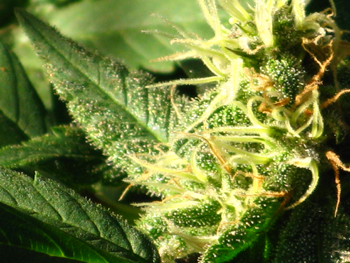
Ganja from my garden

There is ample proof that indicates that man has been using marijuana since the pre-historic times. Normally, the use of marijuana by man is estimated to date back to about 10,000 years ago, but findings at a pre-historic village unearthed in Taiwan in 1972 indicates that the herb has been in use since time immemorial. Ruins of earthenware found in this pre-historic Taiwanese village sustained marks of hemp (a narcotic drug made from plant found in Asia that is smoked, chewed, eaten or drunk to produce a mild euphoric reaction) twines providing proof that marijuana has been used by men in this part of the world since the Stone Age.

According to the Chinese language, marijuana is known as ‘Ma’. It is an enduring aromatic plant that grows once a year and perhaps known to be the ‘mother’ of all civilizations depending on agriculture. For the ancient man, ‘Ma’ was not only a never ending source of food, but the herb also provided sturdy fiber for producing long-lasting ropes and cloth. In fact, while the pre-historic man in most other civilizations continued to hunt and collect food for survival, these two virtues of ‘Ma’ put China at the forefront by establishing an advanced agriculture-based industry. In addition to its medicinal, textile and other uses, marijuana seeds offer high quantities of protein, B vitamins and essential amino acids. Thus, it is little surprising that these marijuana seeds have served as the second or third most essential resource of foodstuff in China for thousands of years.

It is interesting to note that excavations in the ruins of the Nile civilization in Egypt have revealed that the people there used marijuana for its medicinal properties since as early as the 16th century. Similarly, diggings at the primeval Hebrew civilization sites also prove that they used marijuana as a therapy during childbirth since long before the birth of Jesus Christ. Therefore, there is little doubt that the multifaceted properties and uses of marijuana have demonstrated to be a priceless reserve for the continued existence of the Chinese culture since days immemorial to the present.

Significantly, the most primitive substance that was recognized as fabric from the hemp was discovered in a primeval burial site said to belong to the Chou Dynasty (1122-1249 B.C.) in China. This discovery of this hemp fabric corroborated the numerous mentions in history regarding the significance of help in ancient China. According to the instructions in the Book of Rites (compiled in 200 B.C.), the mourners in China were required to wear clothes made from hemp fabric as this was considered to be a way to show respect to the departed soul. Incidentally, this ancient tradition is still followed in several parts of China even today.

However, what is of greater significance is the innovation of the hemp paper by the Chinese as early as 200 B.C. This invention not only helped the early Chinese to maintain all their records, but also enabled them to perform an elementary task – run the government in a methodical manner. The Chinese were successful in keeping in secret the invention as well as the process of making paper from hemp fiber for as long as 900 years, eventually paper manufactured from hemp became crucial for the speedy progress of all the civilizations across the world. Significantly, several thousand years before paper made from hemp became a crucial aspect of the European civilizations, China – a nation historically known to the world as the land of hemp and mulberry – had advanced by leaps and bounds in utilizing the therapeutic and industrialized use of ‘Ma’ or the marijuana.

Medicine practitioners in early China carved the hemp stems into decorative snake-like figures and believed that they acted as good luck charm and helped in getting rid of devils or evil spirits which were considered to be the basis of all corporal ailments. The healing process of these medicine men too was peculiar. They tried to cure all types of diseases by thumping the headboards of the patients’ beds with the flamboyant mysterious hemp stalks while narrating magic charms and invocations to drive away the demons. In Japan, the Shinto priests also performed a comparable ritual by using a small baton conjoined with hemp fibers that are not dyed. This was done with the belief that the serenity of the white hemp stalks would be more effectual in getting rid of the evil spirits and hence the diseases. While modern day science as well as progressive-thinking masses may reject these rituals as mere superstitions, considering the origins of such
ceremonies, there may still be reasons for some observers to give such long-standing traditions a thought.

According to myth as well as history, Chinese emperor Shen-Nung, who ruled the Himalayan nation around 2800 B.C. is said to have introduced different medicines to his people. His name is often mentioned in myths as well as in historical references. According to a myth, emperor Shen-Nung reportedly had a transparent abdomen and he deliberately consumed at least 70 special herbs and plants daily. He practiced this to observe the consequences of these herbs and identify their different properties and usefulness. This way, Shen-Nung is believed to have discovered hundreds of various kinds of medicines for different ailments. His findings are recorded in the world’s oldest manuscript on medicines – ‘Pen Ts’ao’. For his unique efforts, people considered emperor Shen-Nung as sacred and till date the Chinese consider him as the father of their traditional medicine.

Pen Ts’ao says that ‘ma-fen’ or the flowers of the female marijuana plant comprise maximum amount of yin (the principle of darkness, negativity, and femininity in Chinese philosophy that is the counterpart of yang) force. According to the Chinese philosophy, yin is the accessible female trait and in their traditional philosophy and medicine it is vigorously related to yang – the ingenious male constituent. In ancient China, medicine men recommended the use of ma-fen to reinstate the loss of yin in people. For instance, the herbal element is administered to women suffering from exhaustion during menstruation, to cure rheumatism (firmness in joints and muscles), malaria, beri-beri (a degenerative disease of the nerves caused by vitamin deficiency), constipation and even absent-mindedness or forgetfulness. However, it has been warned in Pen Ts’ao that consuming marijuana seeds in excess and over a long period may lead an individual to see the
demons. It also says that ingesting the Ma seeds for prolonged periods may also help one to communicate with the spirits. Apart from telling his people about the different therapeutic uses of the marijuana or Ma, the Chinese emperor Shen-Nung also offered advice and lessons on cultivating hemp for clothing and other textile utilities. Incidentally, in many rural regions of China, people still follow his training in cultivating the hemp.

Bizarrely enough, alchemists (early chemists who sought to transform base metals into gold and discover a life-prolonging elixir) of the Tao era in the first century A.D. breathed in smokes of the burning hemp seeds with a view to get visions that were treasured as an approach to achieve immortality. In fact, in ancient China people believed that marijuana was a better quality elixir (a substance which was once thought to extend life indefinitely) that could refresh the mind as well as the body. Conventional Chinese medical practitioners have used Ma or marijuana pragmatically to cure different kinds of ailments. In the second century A.D., a famous Chinese surgeon called Hua T’o undertook difficult operations using ma-yo, an anesthetic prepared by blending marijuana resin and wine. It has been stated that when application of acupuncture and medications failed to cure certain problems, Ho performed complicated surgeries like amputation and even organ
grafting fastened with sutures (a thread or wire used to close a wound or connect tissues). It is reported that the use of ma-yo as an anesthesia made even such crucial and difficult operations painless for the patients. In the 10 the century A.D., a group of Chinese medical practitioners found that ma-yo proved to be effectual in healing waste diseases and injuries. On the other hand, physicians used Ma to absolve the blood of impurities and bring down temperatures during fevers. Medicines prepared from the herb were also said to be effective in healing rheumatism and for trouble-free childbirths.

Like in China, right through history, long-lasting textile manufactured from sturdy hemp stems have been of incalculable importance in the Western civilizations too. Hemp was known as kannabis in Greece and ancient records on kannabis trade show that as early as the sixth century B.C., the Greek sailors did brisk business in the herb across the Aegean Sea. During the 20th century, archeologists discovered hemp fiber in the cargo space of a Carthaginian cargo vessel that had gone down near Sicily approximately 300 B.C. Mention of use of hemp fiber by the Greek is also found in the writings of the great Greek historian Herodotus. In 450 B.C., Herodotus wrote about the superior value of hemp textile produced by the Greek-speaking Thracians.

Another Greek historian Plutarch wrote that the Thracians followed a custom of throwing the apex of the kannabis plants into fire in order to get intoxicated by the smoke billowing out of the flames. Incidentally, this custom was unknown to the Greeks, who loved wine a lot. A piece of Greek literature from approximately 400 B.C. gives some hint about the usefulness of kannabis as a remedy for backache and this, incidentally, is the only known reference of medical use of the herb in ancient Greece. On the other hand, the Hebrew as well as the Arabic medical practitioners were aware of the different therapeutic advantages of kannabis during the same period and used it to cure various disorders.

Incidentally, in 70 A.D. a Greek medical practitioner called Dioscorides utilized the opportunity of the victory over the Roman masses by pulling together valuable information on different medicinal plants. In his book titled ‘Materia Medica’, Dioscorides poured out his experiences during his journeys with the Roman army and has described various herbs and their usefulness in healing different diseases. In all, Dioscorides has recorded 600 different medicinal plants and provided detailed descriptions, local names, normal habitations as well as their uses in treating different symptoms or ailments. Cannabis sativa L. that has been derived from the Greek work kannabis also finds mention among the 600 different varieties of herbs listed by Dioscorides. In his book, the physician wrote that the herb was valuable for rope manufacture as well as generation of seeds whose juicy extract was effectual in healing earaches as well as withdrawing sexual urge.
‘Materia Medica’ written by Dioscorides proved to be a huge success and was translated into several languages around the globe. Most importantly, the book remained an important medical manual and essential reference text of the Western medical world for over 1500 years.

It is interesting to note that the English term ‘canvas’ has derived its name from the Greek word cannabis. This is ample evidence of the utmost importance accorded to the hemp textile by the European maritime technology. There is a firm belief among a section of historians that it would have been impossible for the different European empires to extend their territories across the seas without the advancement of the technologies involving the cannabis fiber. For instance, in 1492, during one of his trans-Atlantic missions, a vessel of Columbus carried over 80 tons of hemp rigging (ropes) and sails that were manufactured by people over hundreds of thousand hours. Significantly, history suggests that numerous imperial riches were a result of the hard work of the peasants in the fields cultivating hemp. It may be mentioned here that in those days, hemp had emerged as the most vital industrial crop in many developing countries across the world. It would
be noteworthy that while hemp was the most important industrial crop, during the same period the European physicians’ knowledge about the medicinal benefits of cannabis was only restricted to the references made by Dioscorides in his prized text ‘Materia Medica’ and some folk references that were handed over from the medieval period.

Medical science developed in the Western civilization as the Dark Ages gave into the Renaissance period. It was then that the scientists and physicians of the Western civilization discovered several crucial facts regarding the herbal medicines, including the various noteworthy therapeutic values of the marijuana. In his book titled ‘The Anatomy of Melancholy’ published in 1621, Robert Burton recommended that cannabis may be useful in curing depression. Several years later, in 1682, The New London Dispensatory wrote in a few words the usefulness of cannabis seeds in healing coughs and jaundice and much later, in 1764, The New English Dispensatory suggested that poultices prepared by boiling hemp roots was helpful in healing irritations and swellings. Yet again in 1794, the Edinburgh New Dispensary wrote about the growing perception of the therapeutic advantages of the cannabis herb. The report suggested that cannabis was effectual in curing coughs,
venereal or sexually transmitted diseases and urinary incontinence. In his book titled ‘Complete Herbal’ published by Nicholas Culpepper in 1814, the writer took care to list all the known curative uses of the cannabis plant and incorporated all the earlier published applications of the herb to heal different disorders. In addition, Culpepper also published a few new remedial applications of the plant like alleviating colic (sudden attack of pain in the abdomen over and over again, which causes spasm, inflammation or impediment), assuaging problems associated with bowels, stopping worrying bleeding, and lessening swelling of the head as well as easing pains of the hips and joints. He also suggested the use of cannabis as a preservative for ointments and creams for the healing of burns. Incidentally, till the discovery as well as exploration of the Indian sub-continent expanded the perceptions of the Europeans, they had no idea of any psychoactive
consequences related with the use of cannabis.

Carl Linnaeus, a Swedish botanist, compiled the all inclusive reference handbook of the botanical categorization titled ‘Species Planetarium’ in 1753 and this is still regarded as the best work on this subject. In his manual, Linnaeus had included all the classifications on Cannabis sativa done by the Greek physician Dioscorides. However, soon after Linnaeus published ‘Species Planetarium’, a group of botanists from Europe came forward with the argument that the newly researched Indian variety of the cannabis plant was markedly different from the better known European Cannabis sativa that was widely cultivated for both industrial as well as therapeutic use. Few years later, in 1783, a French botanist called Jean Lamarck scrutinized both the varieties of cannabis in his compendium (a comprehensive but brief account of a subject, especially in book form) titled ‘Encyclopedia’ and observed that the Cannabis sativa variety normally cultivated for
its fiber used by the textile industry was distinguished by its height (usually 12 to 16 feet), long stems, meager undergrowth and lean leaves. In contrast, the cannabis that was indigenous to India normally grew up to a height of four to five feet when mature and had intense foliage in unkempt clusters and bore relatively expansive leaves. Lamarck named the new variety or the species found in India as Cannabis indica keeping in view the country of the plant’s origin.

All said and done, factually there are numerous sub-species of cannabis and the botanists still persist on disagreeing over their precise as well as systematic categorization. Meanwhile, most experts have agreed that broadly there are two discrete varieties of cannabis that encompass all the properties existing in the current sub-species of the plant.

Cannabis seems to have originated in China and then it seemingly spread westward across Asia, Minor Asia and the Mediterranean. As it spread over various regions, over the years different ancient cultures adopted the plant. The theory propagated by historians in the West, cannabis spread all over the world and was ultimately accepted by all civilizations across the globe. However, the conventional Hindu scriptures have a completely different story to tell. In fact, the origins of Cannabis indica, according to the Western historians and botanists, are recorded in the Vedas – the four ancient sacred books dating back to the Aryan-dominated Hindu India. The Vedas were written about 4000 years ago and cover almost all aspects of conventional Hindu life, including great myths or legends of invasions, conquests, fight back and religious as well as spiritual advancement. Among several other legends and vibrant myths, the Vedas narrate the story of how Lord
Shiva, one of the three main Hindu Gods, reinvigorated himself in the heat of the sunlight by consuming leaves of the marijuana plants. As Lord Shiva is said to have adapted leaves of the marijuana plant as his favorite diet, he is aptly known as the ‘Lord of Bhang’.

For the uninitiated, ‘bhang’ is a conventional and popular Indian beverage prepared by blending cannabis with different herbs and spices. Liked by people over the ages, ‘bhang’ is reported to be less potent than ‘ganja’ – a substance prepared from the flowering marijuana plants and used for smoking as well as eating. On the other hand, ‘charas’ comparatively more powerful than both ‘bhang’ and ‘ganja’ is prepared from the apex of the cannabis flowers while they are in full blossom. Incidentally, ‘charas’ – thick with muggy resin (a semi-solid substance secreted in the juice of some plants) – is as powerful an intoxicant as the intense or concentrated cannabis resin product called ‘hashish’. For several thousand years such invigorating marijuana products have been a part of many important facets of conventional Indian or Hindu life. They are a part of many rituals as well as plain survival issues. Interestingly, soldiers
gearing up for a battle, couples who are to wed and even devout Hindus worshipping Lord Shiva have invoked their Lord with the holy herb on almost every important occasion.

Athavaveda – the fourth book of the Vedas that has been translated into English and titled ‘The Science of Charms’ – says that ‘bhang’ is one of the ‘five kingdoms of herbs, which relieves anxiety’. Notably, this Western logic or perception does not entirely tally with the South Asian astuteness which is not restricted by Newtonian judgment. According to a Hindu myth or allegory, long before the creation of the universe the Gods had churned a cosmic mountain with a view to obtain nectar for an eternal life. It is said that marijuana plants germinated at all places where the nectar dropped on or touched the earth.

If one takes a close look at the conventional Indian medicine, he or she will find that numerous preparations of cannabis have been used to cure dissimilar disorders such as fever, dysentery, sunstroke as well as leprosy. According to traditional Indian medicine, cannabis is effectively used to absolve phlegm (thick mucus secreted by the walls of the respiratory tract, especially during a cold), speed up the digestion process, hone up the intellect, enhance the body’s preparedness as well as function as elixir vitae (a vital magic potion or a quick cure). Unlike the Western medical science, the Hindu medical practice also deals with the spiritual consciousness of a person while healing his ailments. According to the Hindu mythology, whenever any devotee offers ‘ganja’ to Lord Shiva, the ‘king of Gods’, it pleases Him. Interestingly, this relation between Lord Shiva and ‘ganja’ is believed to be precious while upholding an individual’s
physical health and emotional or psychological balance. A Hindu text titled ‘Rajvallabha’ written in the 17th century states that this wish-gratifying drug was believed to have been acquired by men on earth for the welfare of all people. It further says that those who use it regularly are full of joy and without any distress.

In the early days when the Europeans were setting up colonies in America, cultivation of hemp for industrial use had become essential for world trade. Significantly, though the government’s authorization was required to cultivate hemp, both the Old and the New World were still ignorant of the various medicinal benefits of the marijuana plant. It was only after the Europeans explored India and discovered the advantages of Cannabis indica that the Western physicians sat up and took note of it. When they learnt about the benefits of the cannabis remedies that were found in the conventional Indian medicine, medical practitioners in Europe as well as in America acted swiftly. Even the influence of the traditional medicinal values of Cannabis indica, as found in the conventional Indian herbal medicine, was too strong on them to ignore the herb anymore.

The personal physician to Queen Victoria, Sir John Russell Reynolds asserted in 1890 that cannabis was beneficial for curing dysmenorrhea or painful menstruation, migraine, neuralgia (an intermittent and often severe pain in a part of the body along the path of a nerve, especially when there is no physical change in the nerve itself), convulsions and even insomnia. Reynolds described cannabis as undoubtedly the most useful medication to cure all painful problems or disorders. However, it is yet unknown whether Reynolds or any other Western physician of the period knew about the medicinal benefits of ‘Ma’ or marijuana as was recorded by the naturalist Chinese emperor Shen-Nung over two thousand years before them.

It is interesting to note that more than 100 medical papers relating to the usefulness of cannabis for curing loss of appetite, insomnia, migraine, headache, involuntary twitching, pain, excessive coughing and withdrawal symptoms in conditions like opiate or alcohol addiction were published between 1840 and 1890. According to Sir William Osler, who is known as the ‘father of modern medicine’, cannabis was the best medicine to cure migraines. Osler wrote about this quality of cannabis in his dependable medical manual published in 1915. Although hypodermic (using needles) injection of morphine as well as the use of aspirin and other chemically prepared medicines had begun to replace the conventional herbal remedies in America at that time, still there were at least 30 different medicines prepared from cannabis available with the leading pharmaceutical firms in the country.

Presently, researchers and scientists are examining the usefulness of marijuana in curing ailments like asthma and specific types of glaucoma (an eye disorder marked by unusually high pressure within the eyeball that leads to damage of the optic disk). Researches are also being conducted to find if marijuana can control and cure epileptic seizures and the nausea or vomiting tendency caused by the radiation therapy as well as cancer chemotherapy. On the other hand, despite the fact that the use of marijuana as an intoxicant or for recreation is socially widely accepted in many parts of Asia and Africa, such usage of the plant has serious side-effects or downsides. While experts are still debating on the issue of the degree to which marijuana can be physically as well as psychologically detrimental, there is no argument on the fact that such usage of marijuana is harmful beyond doubt. According to experts and scientists, the real danger is not that much on
the physical aspect, but more on the psychological dependence on the drug. In most countries, possessing marijuana plant is considered to be illegal and is punishable by the law.

PARTS USED
Flowers, leaves, seeds.

USES
As far as medicinal treatment is concerned, marijuana has an incredibly long history dating back to thousands of years and hence it should not be amazing to know that at some point or the other marijuana has been recommended for curing almost all the prevalent diseases. It is beneficial as an analgesic as it provides relief from pain with minimum or insignificant side affects. In fact, marijuana is especially beneficial for cancer and AIDS patients who are enduring chemotherapy. Significantly enough, marijuana can also diminish neurological over activity as well as muscle contraction and hence it is very useful for people suffering from multiple sclerosis (hardening and thickening of body tissue as a result of unwarranted growth or degeneration of nerve fibers), cerebral palsy and other muscular disorders.

By lowering the blood pressure, marijuana provides effectual cure for glaucoma. Normally, glaucoma is a condition where the pressure inside the eyeball is unusually high and is also hypertensive affecting the eye disc. Marijuana is also an effectual remedy in curing asthma, menstrual pains, pain associated with childbirth and arthritis as well as rheumatism. It may also be effective in treating depressions as the herb has anti-depressant properties. At the same time, marijuana encourages as well as stimulates sleep helping patients suffering from insomnia. Even the seeds of the marijuana plant are medicinally useful and according to the Chinese medicine, they have strong and effective laxative qualities and are used to provide relief to the elderly people from constipation.

From herbs2000.com

Congress Asks DEA to End Monopoly on Medical Marijuana Research

Sixteen Members of Congress Urge Attorney General Holder to change DEA policy

More medical cannabis will be available for research soon, if members of Congress have their way.
After lobbying by ASA, Sixteen members of Congress sent a letter last month to Attorney General Eric Holder, urging the Drug Enforcement Administration (DEA) to act “swiftly to amend or withdraw” an order that significantly curtails medical marijuana research in the United States.

At issue is a 2001 request by a University of Massachusetts, Amherst researcher, Dr. Lyle Craker, to grow pharmaceutical-grade cannabis for federally approved research studies. Currently, many approved studies are unable to proceed for lack of research materials. In February of 2007, DEA Administrative Law Judge Mary Ellen Bittner ruled that monopoly should end because expanded medical marijuana research is “in the public interest.” The DEA sat on the ruling for nearly two years before rejecting it less than one week before the new administration took office.

For more than forty years, the government has given the University of Mississippi a monopoly on cultivating marijuana for medical research. Not only is this arrangement unlike that for any other controlled substance regulated by the federal government, no other country restricts research in this way.

The Congressional letter authored by John Olver (D-MA) notes the broad scientific and political support for Craker’s proposal: “Forty-five members of the House of Representatives and Senators Edward Kennedy and John Kerry, as well as a broad range of scientific, medical and public health organizations including the Lymphoma Foundation of America, the National Association for Public Health Policy, and the Multiple Sclerosis Foundation have all written to DEA in support of Professor Craker’s efforts.”

In her 87-page Opinion and Recommended Ruling, Administrative Law Judge Bittner concluded that the quality and quantity of marijuana supplied by NIDA was inadequate for the level of research that cannabis deserves.

The ACLU, which represents Professor Craker in this matter, is requesting reconsideration and an opportunity to respond to new evidence used by the DEA in its decision.

Profound Statements

1. In my many years I have come to a conclusion that one useless man is a shame, two is a law firm and three or more is a congress.
— John Adams

2. If you don’t read the newspaper you are uninformed. If you do read the newspaper you are misinformed. — Mark Twain

3. Suppose you were an idiot and suppose you were a member of Congress. But then I repeat myself. — Mark Twain

4. I contend that for a nation to try to tax itself into prosperity is like a man standing in a bucket and trying to lift himself up by the handle. — Winston Churchill

5. A government which robs Peter to pay Paul can always depend on the support of Paul. — George Bernard Shaw

6. A liberal is someone who feels a great debt to his fellow man, which debt he proposes to pay off with your money. — G. Gordon Liddy

7. Democracy must be something more than two wolves and a sheep voting on what to have for dinner. — James Bovard, Civil Libertarian (1994)

8. Foreign aid might be defined as a transfer of money from poor people in rich countries to rich people in poor countries. — Douglas Casey, Classmate of Bill Clinton at Georgetown University

9. Giving money and power to government is like giving whiskey and car keys to teenage boys. — P.J O’Rourke, Civil Libertarian

10. Government is the great fiction, through which everybody endeavors to live at the expense of everybody else. — Frederic Bastiat, French Economist (1801-1850)

11 Government’s view of the economy could be summed up in a few short phrases: If it moves, tax it. If it keeps moving, regulate it. And if it stops moving, subsidize it. — Ronald Reagan (1986)

12. I don’t make jokes. I just watch the government and report the facts. — Will Rogers

13. If you think health care is expensive now, wait until you see what it costs when it’s free! — P.J. O’Rourke

14. In general, the art of government consists of taking as much money as possible from one party of the citizens to give to the other. — Voltaire (1764)

15. Just because you do not take an interest in politics doesn’t mean politics won’t take an interest in you! — Pericles (430 B.C.)

16. No man’s life, liberty, or property is safe while the legislature is in session. — Mark Twain (1866)

17. Talk is cheap…except when Congress does it. — Anonymous

18. The government is like a baby’s alimentary canal, with a happy appetite at one end and no responsibility at the other.  — Ronald Reagan

19. The inherent vice of capitalism is the unequal sharing of the blessings. The inherent blessing of socialism is the equal sharing of misery. —  Winston Churchill

20. The only difference between a tax man and a taxidermist is that the taxidermist leaves the skin. — Mark Twain

21. The ultimate result of shielding men from the effects of folly is to fill the world with fools. — Herbert Spencer, English Philosopher (1820-1903)

22. There is no distinctly native American criminal class…save Congress. — Mark Twain

23. What this country needs are more unemployed politicians. — Edward Langley, Artist (1928-1995)

Researchers: Even “Organically Raised” Cows Are a “Climate Bomb” by Stephanie Ernst Published February 25, 2009 @ 07:42AM PST

Researchers: Even “Organically Raised” Cows Are a “Climate Bomb”

Published February 25, 2009 @ 07:42AM PST

OK, I wish the title of “The Cow Is a Climate Bomb” had been worded differently. Cattle themselves are not at fault here. Animal agriculture and humans are, for forcing into existence so very, very many of them, just so that we can then kill, eat, and wear them. But still, this study and article are saying what most people have been refusing to acknowledge: “Whether cattle are reared organically or with conventional farming methods, the end effect is bad for the environment, according to a new German consumer report.”

-Read on after the jump for more on this important, first-of-its kind study-

California: Assemblyman Introduces Measure To Regulate Marijuana Like Alcohol Proposal Will Raise Over $1.3 Billion Per Year, State’s Tax Collection Agency Says

San Francisco: State Assemblyman Tom Ammiano (D-San Francisco) introduced legislation this week to legalize and regulate the commercial production and sale of cannabis for adults age 21 or over. The proposal – Assembly Bill 390: The Marijuana Control, Regulation and Education Act – is the first bill ever to be introduced in the California legislature that seeks to tax and control the sale of cannabis.

Ammiano introduced AB 390 at a press conference Monday. Joining the assemblyman in support of the measure were Betty Yee, Chairwoman of the California Board of Equalization (Taxation), Oakland City Council member Rebecca Kaplan, Orange County Superior Court Judge James P. Gray (retired), and Dale Gieringer, Coordinator of California NORML, which provided legislative text and financial analysis for the bill.

“With the state in the midst of an historic economic crisis, the move toward regulating and taxing marijuana is simply common sense,” Ammiano said. “This legislation would generate much needed revenue for the state, restrict access to only those over 21, end the environmental damage to our public lands from illicit crops, and improve public safety by redirecting law enforcement efforts to more serious crimes. California has the opportunity to be the first state in the nation to enact a smart, responsible public policy for the control and regulation of marijuana.”

Local news anchors from CBS, ABC, NBC, and PBS television covered the press conference. National stories regarding Ammiano’s bill have appeared in USA Today, as well as on Air America and CNN.

As introduced, AB 390 would raise over $1.3 billion in annual revenue by taxing the retail production and sale of marijuana, according to financial estimates provided by the California Board of Equalization. An economic analysis by California NORML estimates that a legal, statewide retail market for cannabis could generate additional revenues totaling some $12 to $18 billion dollars per year.

The noncommercial cultivation of marijuana for personal use – defined as ten plants or fewer – would not be subject to taxation under the proposal. In addition, AB 390 would not alter existing legislation on the use of medicinal cannabis, nor would it impose new taxes or sanctions on the medical cultivation of cannabis.

A recent Zogby poll of 1,053 likely voters, commissioned by California NORML and Oaksterdam University, reported that nearly six out of ten respondents on the west coast favor taxing and legally regulating cannabis like alcohol.

“This bill is a winning proposition for California taxpayers,” Gieringer said. “It’s time that California stops wasting resources trying to enforce marijuana prohibition, and instead realizes the tax benefits derived from a legal, regulated cannabis market.”

For more information, please contact Dale Gieringer, California NORML Coordinator, at (415) 563-5858, or Paul Armentano, NORML Deputy Director, at: paul@norml.org. Additional information on AB 390, as well as contact information for the California Assembly, is available at: http://capwiz.com/norml2/issues/alert/?alertid=12758896.