





Elon Musk has tackled electric cars, space ships and modular renewable energy stations. Now he wants a real challenge: running Detroit.
“When the mess gets sorted out, I’d like to have a conversation with whoever’s in charge at the time — the car czar or whoever — and say ‘I’d like to run your plants, if you don’t mind,’” Musk said, starting that conversation Monday at Wired’s first-ever business conference, Disruptive by Design in Manhattan.
What would he do? Hint: he doesn’t think much of namby-pamby hybrids. In the future, Musk said, only electric cars will make sense.
He characterized cars like the Toyota Prius as “splitting the baby” in the style of King Solomon — a compromise that delivers neither the perfect gas-driven or electric-driven experience, due to the duplicate equipment required to harness dual energy sources.
“[The electric car] is an inevitable thing,” Musk said in a conversation with Wired editor-in-Chief Chris Anderson. “The reason I’m putting so much time and effort into helping create Tesla is because I’m hoping we can accelerate that transformation.”
The Paypal co-founder, who made nearly $200 million when eBay acquired that company in 2002, now focuses his energy on three quasar-hot topics: electric cars (at Tesla, the only company that currently sells one), space exploration (at Space-X, which won the contract to replace the Space Shuttle), and new energy technologies (at Solar City, which builds solar power systems for single-family homes and corporations).
Gossip mongers hoping for dirt in the ongoing lawsuit between Musk and Tesla founder Martin Eberhard will have to look elsewhere — with one possible exception.
Part of the problem with Detroit, he says, is the union system. “It’s not out of the question to have unions, but if there’s going to be a union, they’d better understand that they’re on the same side as the company,” he added. “I’m against having a two-class system where you’ve got the workers and then the managers, sort of like nobles and peasants…
“Most of our experienced factory workers come from unionized environments, and we asked them what benefit did they see in unions,” he added. “They said, ‘Well, if their boss was an asshole, they had recourse.’
“I said, ‘Let’s make a rule: There will be no assholes.’ I fired someone for being an asshole. And I only had to do that once, actually.”
Pictured: Chris Anderson (l) and Elon Musk (r). Photo by James Moran
Full coverage of Wired’s Disruptive by Design Conference
See Also:
- Tesla’s Founder Sues Tesla’s CEO
- S Is For Stunner: Tesla Reveals New Model S
- Watch Out, Tesla. That’s a Brusa In Your Mirror
- First Look at Tesla’s Stunning Model S
- Tesla Motors Joins Daimler On a Smart EV
- Daimler Takes 10 Percent Stake in Tesla
- Tesla Deal Helps Daimler “Bridge” Its Battery Gap
- Share in Tesla Electrifies the Teutons
- Next-Gen Tesla Roadster to Have Four Seats
- Elon Musk Is Betting His Fortune on a Mission Beyond Earth’s Orbit
- Now 0-for-3, SpaceX’s Elon Musk Vows to Make Orbit
- Uber Entrepreneur: An Evening with Elon Musk – Video – Wired
- SpaceX’s Elon Musk Talks Up Tesla on NPR
- Musk’s Rocket, It Does Not Go
 Monsanto and the biotech bullies are once again moving to tighten their grip on the world’s food supply. Genetically engineered (GE) varieties now account for 70-90% of all conventional (non-organic) corn, soybeans, cotton, and canola grown in the U.S. Joining the growing menu of unlabeled and untested gene-spliced Frankenfoods, genetically engineered sugar (derived from GE sugar beets) hit store shelves in 2008. Now it appears that the most controversial crop of them all, Monsanto’s GE wheat, is not far behind, at least if industry gets its way. Given that wheat is such a major global crop and essential ingredient in bread, breakfast cereals, pasta and other everyday foods, the force-feeding of unlabeled GE wheat on the public would represent a major conquest for Monsanto and the biotech industry.
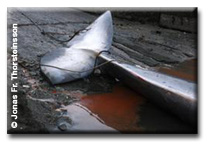 On June 22, over 80 governments from around the world will meet at the International Whaling Commission (IWC) meeting to decide the future of the world’s whales. A global ban on commercial whaling that has held strong for over 25 years is in danger of being revoked – which means whales around the world could once again be subjected to terrible suffering and agonizing deaths.
 HFCS. As scientists learn more about the problems associated with HFCS, more consumers are seeking products with traditional fruit sugars or sucrose table sugar. The ever powerful corn lobby and its associated industry trade groups have responded by launching an aggressive advertising campaign claiming HFCS is as safe as its natural competitors. But new studies confirm previous studies and indicate a diet high in fructose, as compared to glucose, gained more of the dangerous belly fat that has been linked to a higher risk for heart attack and stroke.