The Absinthe Enigma Resurgence of a Legendary Spirit

by Lux and Fire Erowid

Nov 2008
Originally published in Erowid Extracts
Citation:   Lux, Erowid F. “The Absinthe Enigma; Resurgence of a Legendary Spirit.” Erowid Extracts. Nov 2007;(13):12-14

As products called absinthe are once again being widely marketed, absinthe has shifted from obscure historical drink to chic epicurean beverage. Named after Artemisia absinthium (wormwood), its defining herbal ingredient, this spirit has a reputation for producing unique effects not attributable to its alcohol content alone. These effects are commonly attributed to thujone, a psychoactive chemical in wormwood, but new arguments have been proposed claiming that traditional absinthe contained little to no thujone. Some private and peer-reviewed research analyzing vintage bottles of absinthe and contemporary absinthe made from traditional recipes has found lower levels of thujone than expected, raising the question of whether nineteenthcentury absinthe ever contained active amounts.

Major media publications such as The New Yorker, The New York Times, and USA Today have brought public attention to this debate. The issue of thujone content is not only of scientific concern, but of commercial concern as well, since U.S. and European regulations set maximum values for thujone in absinthe. While some vendors emphasize high thujone levels as a selling point, others use the new theory, that absinthe originally had negligible amounts, to defend their low-thujone absinthe as authentic.

The following articles include a look at absinthe’s history, the current U.S. regulatory environment, and the complicated issue of thujone in wormwood and absinthe.

See Also: Absinthe in the United States and The Debate About Wormwood and Thujone Psychoactivity

Parasitic Infection: Symptoms and Treatment

Hulda Regehr Clark drew world attention to one specific fluke that she maintains is the cause of all diseases. There are in fact over 3000 different parasites that have been loosely grouped into four different categories.

According to the World Health Organization, 3.5 billion people suffer from some type of parasitic infection. Not all of these people live in third world countries; many in the developed world have any number of parasitic infections, some of which are so highly contagious that extremely casual contact with something that has been handled by an infected person can infect another person.

Since there are such a huge variety of parasites and their characteristics vary greatly, it is not possible to generalize too much; however some broad statements are possible. The symptoms of parasitic infection vary enormously, enough that anyone reading the list that follows will quickly assume that he or she harbors some type of parasitic infection. Therefore, it should be stated that the presence of one or more of these symptoms does not lead ipso facto to the conclusion that one is infected, merely that it might be worth investigating the possibility of such an infection.

Symptoms of Parasitic Infection

Acute parasite infection is usually characterized by greater or lesser abdominal distress and diarrhea, often urgent and attended by burning sensations and tremendous fluid loss. Only rarely is there any visible evidence of infection. Moreover, many laboratories fail to detect the presence of parasites even when presented with specimens from infected persons. It is therefore sometimes necessary for the patient to determine whether infection is likely and to self-administer some remedy since allopathic medicine requires a diagnosis before prescriptions can be written.

Once a condition has moved from acute to chronic, there may be alternating periods of constipation and diarrhea, abdominal distention and bloating, intestinal cramping followed by burning sensations and the sudden urge to eliminate. Generally, there is malabsorption of nutrients, especially fatty foods. Irritable bowel syndrome, blood sugar fluctuations, sudden food cravings, and extreme emaciation or overweight are all possible symptoms—but, as stated, not necessarily proof of parasitic infection.

Itching is a possible clue to infection, especially among children; however, the absence of itching does not mean there is no infection. The itching tends to be worst where there is moisture: nose, eyes, ears, and of course the anus. Skin sensitivity is also common: rashes, eczema-like conditions, and even serious eruptions.

Many parasites affect the nervous system and give rise to sleep disorders, such as insomnia. In children, hyperactivity is common, but adults may have symptoms ranging from depression to anxiety. Some parasites affect the brain and memory. In short, the part of the body affected depends on where the parasites have invaded: blood, intestines, liver, pancreas, kidneys, brain, etc. To make infection even more difficult to determine, add to this scenario the fact that many, if not most, parasites migrate so the symptoms could change depending on where the parasites are at any given time.

How Parasite Infections are Contracted

It is extremely easy to contract a parasite infection. Contaminated water is one source of infection. Improperly washed or undercooked food is a common means of infection. Transmission from pets is another. Contact with another infected person is also a common route of infection. Travel can escalate the risks. Antibiotics pose another problem because they interfere with normal intestinal flora, some which tend to control certain types of infection.

Treatment

Since there are many types of parasites, each with its own particular life cycle and pattern, a few generalizations may simplify the rationale behind the different treatment strategies.

First, one needs to understand that the parasite is a creature that depends on a host for survival, ergo its name. It leeches nutrients that the host needs in order to be healthy.

Second, the parasite invades a bodily structure and inflicts damage to that structure so healing requires both the elimination of the parasite and the regeneration or rejuvenation of the affected organs.

One thing at a time. I spent many years in tropical countries and came to realize that experts in parasitology are more likely to hail from such countries than from the big modern medical institutions that tend to underestimate the importance of parasitic infection. Parasites lay eggs, thousands of them each day. According to most investigators, the eggs are destroyed by cloves and/or clove oil. Some eggs may be weakened by hydrochloric acid in the stomach, but parasites are clever and want to survive so they usually lay their eggs where the chances of viability are greater. Therefore, the hydrochloric acid is mainly effective against newly ingested eggs. Since one can never be certain of destroying all the eggs, perseverance has its rewards.
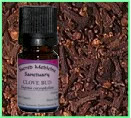
Many parasites hide in the folds of the large intestine or under the membrane lining of the intestines. When the eggs hatch, usually around the time of the full moon, the lining sloughs off and exposes a sensitive area that gives rise to acute pain and often the urge to eliminate. Some people have observed the tissue when it is sloughed off.

Cloves

I want to tell a clove story. I had some cloves in a conventional spice jar. One day when I went to use the cloves, I noticed that the red plastic lid was “melted.” It looked just as it might had it been exposed to extreme heat, but the plastic was a bit sticky. I have since discovered that several spices, good quality, fresh spices, have a similar capacity to emulsify plastic. I am certain that it is the volatile oils in the cloves that possess this unique trait.

For parasite cleansing, it is necessary to use fresh cloves that have not been irradiated. Most spices are irradiated with 35,000 the amount of radiation permitted in a chest x-ray. This is ostensibly done to eradicate bacteria, but spices are generally excellent bactericides so the irradiation is merely a way of destroying the precious properties of spices. Non-irradiated spices are available from most high-end health foods stores, and we, of course, carry these spices.

Cloves are among the most antibacterial spices known, but as we all know, a few cloves go a long way. Those with some familiarity with herbal medicine know that clove oil is also used to numb pain due to dental infection; but few know that part of the reason clove oil works so well is that it alleviates the infection. Cloves are antiseptic, bactericidal, and antiparasitic.

The Second Strategy

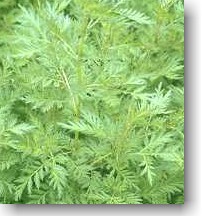
After addressing the eggs, one can deal with the parasites that managed to hatch. There are various opinions here as to what works. Hulda Clark and Hanna Kroeger used wormwood, Artemesia absinthium, in a powdered form and the green hulls of black walnuts in a tincture. These are traditional Western herbs for parasites, and a recent study at the University of Washington suggests that a different species of wormwood, Artemisia annua, a famed anti-malarial herb that is also in many parasitic formulas, has significant anti-cancer properties as well. It is this artemisia that we use in our formula.

Chinese medicine relies on bitter herbs to stimulate the liver to produce more bile. One theory is that it is the bile that kills intestinal parasites, not the toxic properties of the herbs. It is important to bring this out since wormwood is toxic, not perhaps in small doses, but to gain some idea of its addictive and toxic properties, one need merely look at the absinthe habits of the nineteenth century.
Vermouth gets its name from the German “wermut” or Anglo Saxon “wermod” or wormwood, presumably because absinthe was used as a flavoring in some recipes for this famed aperatif. I feel quite certain that some of the traditions of consuming such beverages stemmed from the monasteries that made the wines and liquors and that also housed the vast libraries of books on botanical medicine. There is a cultural tradition of dealing with some of the risks of parasitic infection that is seen in some of the rituals from the past.

While Artemisia annua is safe, Artemisia absinthium should be used cautiously. It may anesthetize a worm enough that it looses its grip on the intestines so that it can be eliminated. This said, some species of wormwood have other properties that justify their use in antiparasitic protocol. For instance, Artemisia annua, popularly known as Sweet Annie, reduces stomach pain and helps to relieve the anemia that often attends parasitization of red blood cells.

Intestinal Flora, Foods, and Other Measures

For a web page, this has become quite long, but it would be irresponsible to omit some further recommendations. Since parasites thrive in the absence of proper intestinal flora, it is wise to repopulate the body with intestinal flora. Chlorinated water and diarrhea cause destruction and loss of friendly flora so every effort should be made to rebuild the flora. Turmeric greatly assists this work as do supplements of acidophilus, bifidus, bulgaricus, and other friendly organisms.

Use of green juices, aloe juice, and a diet high in greens also helps as does supplemental garlic and asafoetida (in capsules or food.) In addition, one can nibble on pumpkin seeds and eat fresh pineapple and calmyrna figs. Coconut also has antiparasitic properties. According to some sources, sesame oil is somewhat antiparasitic, and black cumin seed, Nigella sativa, has significant anti-parasitic properties. Many recommend drinking sesame oil, a teaspoon or so at a time throughout the day. I personally would add clove oil and/or fennel seed oil to the sesame oil. Fennel seed tea, three cups per day, can be used, especially towards the end of the cleanse. Some authorities believe that fennel intoxicates parasites, making them less protective and easier to annihilate.

Recipe for pumpkin seed, sesame, astragalus nutbutter

In my experience, no one succeeds in ridding the body of parasites in the five days Hulda Clark suggests is possible. I am convinced of this because there are so many hiding places in the body, especially the intestines. I do not deny that one can become significantly better in a short time. I merely doubt that thorough elimination is possible in a short time. I know specialists in India who required four years to complete treatment. This said, somewhere between the miraculous five-day cure and the discouraging four-year one, there might be a middle ground.

Ayurvedic parasite protocols

Realism

When using parasite formulas, I would suggest hitting hard on the days leading up to the full moon and just thereafter and going a bit easier on the last and first quarters of the moon. I would do this consistently for at least three months or until all symptoms disappear. Once the body is rid of parasites, it has to be understood that it needs to recuperate from the insult. Therefore a program of regeneration of the affected organs should follow.

Dealing with tissue damage, toxins, and infections associated with parasites

In the meantime, I would suggest that while undergoing the parasite purge that one eat less and put ones pets and other family members on a similar regime so that everyone is on a clean footing when the job is done.

Excellent (and disturbing) photograph of pinworm

stats on marijuana and teens

Aaron Houston, AlterNet – Buried in the latest Monitoring the Future survey — the major annual, federally funded survey of teen drug use — is an astonishing finding: More 10th-graders now smoke marijuana than smoke cigarettes. . . In the just-released survey, 13.8 percent of 10th-graders reported smoking marijuana in the past 30 days (considered “current use” by researchers), while just 12.3 percent smoked cigarettes. For eighth and 12th grades, cigarette use still exceeded marijuana, but the gap narrowed to insignificance. This year, current and past-year marijuana use increased for eighth- and 12th-graders and declined for 10th-graders, but none of the changes were large or statistically significant. In contrast, current cigarette smoking did drop significantly for 10th-graders. Changes for most other drugs were marginal, except for a significant increase in methamphetamine use among 10th-graders.

Change You Won’t Believe

The peak oil story has not been nullified by the scramble to unload every asset for cash — including whomping gobs of oil contracts — during this desperate season of bank liquidation. The main implication of the peak oil story is that we won’t be able to generate the kind of economic growth that defined our way of life for decades because the primary energy resources needed for it will be contracting.
Just as global oil production peaked, our economy evolved into a morbid hypertrophy, and the chief manifestation of it was the suburban sprawl-building fiesta that has now climaxed in the real estate bust. By the early 21st century, when so much American manufacturing had been swapped out to Asia, there was no business left except sprawl-building — a manifold tragedy which wrecked the banks that financed it, and left the ordinary people mortgaged to it with ruinous liabilities.
That economy is now in its death throes. The “normality” it represents to so many Americans is gone and can’t be brought back, no matter how wistfully we watch it recede. Even so, it was obviously not good for the country. The terrain of North America has been left scarred by unlovable objects and baleful futureless vistas that, from now on, will shed whatever pecuniary value they once had. It represents the physical counterpart to the financial mess that has been left to the young generations to clean up — and the job will take a very long time.
We have to, so to speak, get to place mentally where we can face the kinds of change that are now necessary and unavoidable. We’re not there yet. It’s not clear whether the elected new national leadership knows just how severe the required changes will really be. Surely the public would be shocked to grasp what’s in store. Probably the worst thing we can do now would be to mount a campaign to stay where we are, lost in raptures of happy motoring and blue-light-special shopping.
The economy we’re evolving into will be un-global, necessarily local and regional, and austere. It won’t support even our current population. This being the case, the political fallout is also liable to be severe. For one thing, we’ll have to put aside our sentimental fantasies about immigration. This is almost impossible to imagine, since that narrative is especially potent among the Democratic Party members who are coming in to run things. A tough immigration policy is exactly the kind of difficult change we have to face. This is no longer the 19th century. The narrative has to change.
The new narrative has to be about a managed contraction — and by “managed” I mean a way that does not produce civil violence, starvation, and public health disasters. One of the telltale signs to look for will be whether the Obama administration bandies around the word “growth.” If you hear them use it, it will indicate that they don’t understand the kind of change we face.
It is hugely ironic that the US automobile industry is collapsing at this very moment, and the ongoing debate about whether to “rescue” it or not is an obvious kabuki theater exercise because this industry is hopeless. It is headed into bankruptcy with one hundred percent certainty. The only thing in question is whether the news of its death will spoil the Christmas of those who draw a paycheck from it, or those whose hopes for an easy retirement are vested in it. But American political-economy being very Santa Claus oriented for recent generations, the gesture will be made. A single leaky little lifeboat will be lowered and the chiefs of the Big Three will be invited to go for a brief little row, and then they will sink, glug, glug, glug, while the rusty old Titanic of the car industry slides diagonally into the deep behind them, against a sickening greenish-orange sunset backdrop of the morbid economy.
A key concept of the economy to come is that size matters — everything organized at the giant scale will suffer dysfunction and failure. Giant companies, giant governments, giant institutions will all get into trouble. This, unfortunately, doesn’t bode so well for the Obama team and it is salient reason why they must not mount a campaign to keep things the way they are and support enterprises that have to be let go, including many of the government’s own operations. The best thing Mr. Obama can do is act as a wise counselor companion-in-chief to a people who now have to leave a lot behind in order to move forward into a plausible future. He seems well-suited to this task in sensibility and intelligence. The task will surely include a degree of pretense that he is holding some familiar things together and propping up some touchstones of the comfortable life. But the truth is we are all going to the same unfamiliar new territory.
The economy we’re moving into will have to be one of real work, producing real things of value, at a scale consistent with energy resource reality. I’m convinced that farming will come much closer to the center of economic life, as the death of petro-agribusiness makes food production a matter of life and death in America — as opposed to the disaster of metabolic entertainment it is now. Reorganizing the landscape itself for this finer-scaled new type of farming is a task fraught with political peril (land ownership questions being historically one of the main reasons that societies fall into revolution). The public is completely unprepared for this kind of change. We still think that “the path to success” is based on getting a college degree certifying people for a lifetime of sitting in an office cubicle. This is so far from the approaching reality that it will be eventually viewed as a sick joke — like those old 1912 lithographs of mega-cities with Zeppelins plying the air between Everest-size skyscrapers.
The crucial element in the transformation underway will be emotion. The American experience for a few generations has produced an adult population with very childish instincts, increasingly worse each decade. For instance, the desperate power fantasies among the younger tattooed lumpenproles — those with next-to-zero real economic power — suggest a certain unappetizing playing-out of resource competition when the supply of Cheez Doodles and Pepsi starts to dwindle. But even the heretofore gainfully employed middle classes are pretty lost in fantasies at least of comfort an convenience. For years now, I have wondered how their sense of grievance and resentment will be expressed when the supermarket shelves run bare and the cardboard signs get taped over the local gas pump and the cable TV gets cut off for non-payment. You wonder, to put it bluntly, how far gone we really are.
____________________________________
My new novel of the post-oil future, World Made By Hand, is available at all booksellers.

NO TRANSITION ON MARIJUNA-From the Obama transition site

Q: “Will you consider legalizing marijuana so that the government can regulate it, tax it, put age limits on it, and create millions of new jobs and create a billion dollar industry right here in the U.S.?” S. Man, Denton

A: President-elect Obama is not in favor of the legalization of marijuana.

FEDERAL APPEALS COURT THROWS OUT PART OF PATRIOT ACT

ACLU – A federal appeals court upheld, in part, a decision striking down provisions of the Patriot Act that prevent national security letter recipients from speaking out about the secret records demands. The decision comes in an American Civil Liberties Union and New York Civil Liberties Union lawsuit challenging the FBI’s authority to use NSLs to demand sensitive and private customer records from Internet Service Providers and then forbid them from discussing the requests. Siding with the ACLU, the U.S. Court of Appeals for the Second Circuit found that the statute’s gag provisions violate the First Amendment.

“We are gratified that the appeals court found that the FBI cannot silence people with complete disregard for the First Amendment simply by saying the words ‘national security,'” said Melissa Goodman, staff attorney with the ACLU National Security Project. “This is a major victory for the rule of law. The court recognized the need for judicial oversight of the government’s dangerous gag power and rejected the Bush administration’s position that the courts should just rubber-stamp these gag orders. By upholding the critical check of judicial review, the FBI can no longer use this incredible power to hide abuse of its intrusive Patriot Act surveillance powers and silence critics.”

The appeals court invalidated parts of the statute that wrongly placed the burden on NSL recipients to initiate judicial review of gag orders, holding that the government has the burden to go to court and justify silencing NSL recipients. The appeals court also invalidated parts of the statute that narrowly limited judicial review of the gag orders – provisions that required the courts to treat the government’s claims about the need for secrecy as conclusive and required the courts to defer entirely to the executive branch.

Best Xmas Tune? Willie and Colbert’s Ode to Weed

By Scott Thill EmailDecember 02, 2008 | 9:36:52 PM

A Colbert Christmas: The Greatest Gift of All has redefined the holiday special for the new millennium. But it may also have redefined holiday songs for the 21st century as well, especially Willie Nelson and Stephen Colbert’s “Little Dealer Boy.” Think “Little Drummer Boy” 2.0, substitute the phrase “finest gifts” for marijuana, and you’re there.

Or better yet, just check out the video of the entire song at right. It’s a double-exposure romp that might make Jesus blush, if he wasn’t already rumored to have used cannabis himself. After all, as Willie sings in the duet, cannabis is a “plant that smokes more sweetly than either frankincense or myrrh.”

If you like the tune, you’re probably going to love the rest of the bizarro standards found A Colbert Christmas, out now as an iTunes-only digital EP. Heck, you might even dig Toby Keith’s War-On-Christmas shocker “Have I Got a Present For You,” the very track that had me worried that Colbert’s holiday special might suck.

Boy, was I wrong about that.

Meanwhile, “Little Dealer Boy” has caught some flak on Colbert Nation, but I think it is one of the finest Christmas tunes ever laid down. Am I high? Post a comment below and let me know.

Jesus ‘healed using cannabis’

Jesus was almost certainly a cannabis user and an early proponent of the medicinal properties
of the drug, according to a study of scriptural texts published this month. The study suggests
that Jesus and his disciples used the drug to carry out miraculous healings.The anointing oil
used by Jesus and his disciples contained an ingredient called kaneh-bosem which has since
been identified as cannabis extract, according to an article by Chris Bennett in the drugs magazine,
High Times, entitled Was Jesus a Stoner? The incense used by Jesus in ceremonies also contained
a cannabis extract, suggests Mr Bennett, who quotes scholars to back his claims.
“There can be little doubt about a role for cannabis in Judaic religion,” Carl Ruck, professor
of classical mythology at Boston University said. Referring to the existence of cannabis in anointing
oils used in ceremonies, he added: “Obviously the easy availability and long-established tradition of
cannabis in early Judaism _ would inevitably have included it in the [Christian] mixtures.”

Mr Bennett suggests those anointed with the oils used by Jesus were “literally drenched
in this potent mixture _ Although most modern people choose to smoke or eat pot, when

its active ingredients are transferred into an oil-based carrier, it can also be absorbed through
the skin”. Quoting the New Testament, Mr Bennett argues that Jesus anointed his disciples
with the oil and encouraged them to do the same with other followers. This could have been
responsible for healing eye and skin diseases referred to in the Gospels.

“If cannabis was one of the main ingredients of the ancient anointing oil _ and receiving
this oil is what made Jesus the Christ and his followers Christians, then persecuting those
who use cannabis could be considered anti-Christ,” Mr Bennett concludes.

TORONTO LEADS WORLD ON SWITCH FROM BOTTLED WATER

Tony Clarke, Toronto Star – Toronto’s decision to ban the sale and distribution of bottled water on city premises was a watershed moment for water justice advocates the world over. What was truly significant about Toronto’s action was not that it banned an environmentally destructive product, but that it included a commitment to ensuring access to tap water in all city facilities.

Toronto is now the largest city in the world to pass such far-reaching regulations controlling the distribution of bottled water on municipal property and promoting the use of publicly delivered tap water. Other Canadian and American municipalities have enacted policies encouraging the consumption of tap water and limiting the distribution of bottled water using taxpayer money, but none as large as Toronto has taken such a comprehensive approach.

Toronto’s action is in many ways the result of a diverse North American public campaign that has successfully raised awareness about bottled water as an unnecessary and wasteful product when the majority of people in Canada and the United States have access to clean drinking water from the tap.

As is often the case, Toronto’s initiative had its own elected champions steering it forward. City Councillor Glen De Baeremaeker and Mayor David Miller had the progressive vision to include bottled water in their goal of keeping unnecessary packaging out of city landfills. Their efforts were coupled with a concerted grassroots push by Ontario- based activists, public interest organizations, community and student groups, labour unions and environmental networks.

In the days leading up to the Toronto vote, city councilors faced a barrage of lobbying from the bottled water industry. These frantic attempts to defeat the resolution continued over the two days of debates when the industry brought a battery of lobbyists, corporate executives and industry associations into the council chamber to influence the vote. . . However, their high-priced strategy ultimately failed to influence elected officials, who voted with a two-thirds majority to ban bottled water and reinvest in the public delivery of drinking water.

For many, Toronto has now become the champion of the “Back to the Tap” municipal movement in Canada. To date, this movement has already seen 17 municipalities from five provinces ban the bottle. With 45 others indicating an interest to follow suit, Toronto’s leadership will no doubt inspire more municipalities to stand up and speak out in support of public water. To further enable this municipal movement, Toronto City Council also passed a motion to circulate its resolutions and amended staff report to the Federation of Canadian Municipalities, the Association of Municipalities of Ontario and the Regional Public Works Commissioners of Ontario.