Homepage of Stephen Saunders

Archive for the ‘Word Meta-Meanings’ Category

Change You Won’t Believe

No Comments »

December 20th, 2008 Posted 5:36 pm

The peak oil story has not been nullified by the scramble to unload every asset for cash — including whomping gobs of oil contracts — during this desperate season of bank liquidation. The main implication of the peak oil story is that we won’t be able to generate the kind of economic growth that defined our way of life for decades because the primary energy resources needed for it will be contracting.
Just as global oil production peaked, our economy evolved into a morbid hypertrophy, and the chief manifestation of it was the suburban sprawl-building fiesta that has now climaxed in the real estate bust. By the early 21st century, when so much American manufacturing had been swapped out to Asia, there was no business left except sprawl-building — a manifold tragedy which wrecked the banks that financed it, and left the ordinary people mortgaged to it with ruinous liabilities.
That economy is now in its death throes. The “normality” it represents to so many Americans is gone and can’t be brought back, no matter how wistfully we watch it recede. Even so, it was obviously not good for the country. The terrain of North America has been left scarred by unlovable objects and baleful futureless vistas that, from now on, will shed whatever pecuniary value they once had. It represents the physical counterpart to the financial mess that has been left to the young generations to clean up — and the job will take a very long time.
We have to, so to speak, get to place mentally where we can face the kinds of change that are now necessary and unavoidable. We’re not there yet. It’s not clear whether the elected new national leadership knows just how severe the required changes will really be. Surely the public would be shocked to grasp what’s in store. Probably the worst thing we can do now would be to mount a campaign to stay where we are, lost in raptures of happy motoring and blue-light-special shopping.
The economy we’re evolving into will be un-global, necessarily local and regional, and austere. It won’t support even our current population. This being the case, the political fallout is also liable to be severe. For one thing, we’ll have to put aside our sentimental fantasies about immigration. This is almost impossible to imagine, since that narrative is especially potent among the Democratic Party members who are coming in to run things. A tough immigration policy is exactly the kind of difficult change we have to face. This is no longer the 19th century. The narrative has to change.
The new narrative has to be about a managed contraction — and by “managed” I mean a way that does not produce civil violence, starvation, and public health disasters. One of the telltale signs to look for will be whether the Obama administration bandies around the word “growth.” If you hear them use it, it will indicate that they don’t understand the kind of change we face.
It is hugely ironic that the US automobile industry is collapsing at this very moment, and the ongoing debate about whether to “rescue” it or not is an obvious kabuki theater exercise because this industry is hopeless. It is headed into bankruptcy with one hundred percent certainty. The only thing in question is whether the news of its death will spoil the Christmas of those who draw a paycheck from it, or those whose hopes for an easy retirement are vested in it. But American political-economy being very Santa Claus oriented for recent generations, the gesture will be made. A single leaky little lifeboat will be lowered and the chiefs of the Big Three will be invited to go for a brief little row, and then they will sink, glug, glug, glug, while the rusty old Titanic of the car industry slides diagonally into the deep behind them, against a sickening greenish-orange sunset backdrop of the morbid economy.
A key concept of the economy to come is that size matters — everything organized at the giant scale will suffer dysfunction and failure. Giant companies, giant governments, giant institutions will all get into trouble. This, unfortunately, doesn’t bode so well for the Obama team and it is salient reason why they must not mount a campaign to keep things the way they are and support enterprises that have to be let go, including many of the government’s own operations. The best thing Mr. Obama can do is act as a wise counselor companion-in-chief to a people who now have to leave a lot behind in order to move forward into a plausible future. He seems well-suited to this task in sensibility and intelligence. The task will surely include a degree of pretense that he is holding some familiar things together and propping up some touchstones of the comfortable life. But the truth is we are all going to the same unfamiliar new territory.
The economy we’re moving into will have to be one of real work, producing real things of value, at a scale consistent with energy resource reality. I’m convinced that farming will come much closer to the center of economic life, as the death of petro-agribusiness makes food production a matter of life and death in America — as opposed to the disaster of metabolic entertainment it is now. Reorganizing the landscape itself for this finer-scaled new type of farming is a task fraught with political peril (land ownership questions being historically one of the main reasons that societies fall into revolution). The public is completely unprepared for this kind of change. We still think that “the path to success” is based on getting a college degree certifying people for a lifetime of sitting in an office cubicle. This is so far from the approaching reality that it will be eventually viewed as a sick joke — like those old 1912 lithographs of mega-cities with Zeppelins plying the air between Everest-size skyscrapers.
The crucial element in the transformation underway will be emotion. The American experience for a few generations has produced an adult population with very childish instincts, increasingly worse each decade. For instance, the desperate power fantasies among the younger tattooed lumpenproles — those with next-to-zero real economic power — suggest a certain unappetizing playing-out of resource competition when the supply of Cheez Doodles and Pepsi starts to dwindle. But even the heretofore gainfully employed middle classes are pretty lost in fantasies at least of comfort an convenience. For years now, I have wondered how their sense of grievance and resentment will be expressed when the supermarket shelves run bare and the cardboard signs get taped over the local gas pump and the cable TV gets cut off for non-payment. You wonder, to put it bluntly, how far gone we really are.
____________________________________
My new novel of the post-oil future, World Made By Hand, is available at all booksellers.

Words change the chemical composition of your brain!!!!

No Comments »

October 29th, 2008 Posted 2:02 am

This page will change the way you look at words FOREVER!

blip blop

This page will change the way you look at words
FOREVER!!

Words change the chemical composition of your brain!!!!

That is, hearing words in certain formations result in a shift in the neurochemical composition of the brain…….

This is the same result that chemical substances such as drugs produce……..

So it said that “Words are Drugs” and this seems to be true…….

This is collection of thoughts and musings about the origins and relationships of certain words to other words or of relationships to words….

Anagrams, palindromes, verbal and written expressions which bridge the gap intellectually between the physical and spiritual planes…..

Etymology is the study of the origins of words and the meanings of words and shifts in usage that take place over time. You will find here very interesting information which will create changes in you even though you may not understand (or overstand for that matter…) what is precisely meant………..

You are about to experience a collection of expressions which may inspire a few of your own……..

If you wish to add expressions to this page click here

Majik’s Etymology and Word Relationship Dictionary
ABUNDANCE-

“A BUN DANCE”

A measure of that which makes one shake one’s buns

ALUMINUM-

From the latin “lum” , light and the latin “minum” ,to diminish. “To diminish the light” The ingestion of and build-up in the body, of aluminum results in Alzheimer’s and other brain diseases.

ARMAGEDDON-

“Arm age done”

ARTISTRY-

“art is try”

BALANCE-

“A ball dance”

To dance on a ball.

“Be all and see”

BLAME-

“be-lame” The breakdown occurred because something or body was lame……that is where the “be lame ” falls….

BUDGET-

Your budget is the amount of value you will get from the goods you have available to trade…..The base level natural resource of the economy on this planet is HEMP, or “legal tender”. So it follows that your budget is what your “buds will get you” your BUD-GET…..

CIRCUMSTANCE-

The way things stand around you

CONCERN-

See what it takes to be on your goal and c what it takes to “ern” your way there.

COURAGE-

“See Our Age”. Then do what it takes to be enough.

DAMAGE-

“damn age”

DREAD-

“The READ” ; or “How it is unfolding” “Getting a reading on where your experience of life is going ….Your ego’s perception of unfolding events that create your circumstances

EARTH-

The Ear.

to hear.

ANAGRAMS with the word “heart”

see also “hearth”

ETERNITY-

“eat her nightie” {grin}

ENTRAINMENT-

mind in training

FATHER-

FAT -HER” The aspect of the grandmother part of the feminine that is always alone and has nobody’s shoulder above her to cry on….The shoulders upon which falls the burden of carrying the load or responsibility part of being GOD. All men fall into this category, even though they might deny it and run from the ability to respond to the truth of it.

INFORMATION-

Form at I on”

In-Form at I, On

GOOD-

God with more “o’s”……. When you understand this part of god you say “ohhhh” and you feel good…………

GOAL-

“What we {all go] for…..”

GOLD-

the oldest part of us(the Earth), sunk the furthest into the material plane and yet still in a formation that connects to eternity through the mathematics which defines it’s crystaline structure.

HARMONY-

a contraction of the three archaic expressions:”Harme”-”O”-”Nigh”(same as “nary”.) This literally means “harm of none”.

HEARTH

heart, the earth, “the art of he”

ANAGRAMS with the phrase “the ear”

see also “EARTH”

MEDIA-

“from me to you”

MISCHIEF-

A chance to lead that misses -”you got to be the chief and you missed your goal, and created mis-Chief

PAIN-

“PAY -IN”

RESPONSIBILITY-

The ability to respond.

SEMANTICS-

“see how man ticks..”

SORRY-

I’m SO AWRY….” WHAT MOST PEOPLE REALLY MEAN IS “I APOLOGIZE OR “EXCUSE ME”

TREAD- “the read” or “the way” see “dread”.
TEN-

“To end”

“the end of a cycle”

TOWN-

“to own”

TRY-

“TO awry”….” “I go off the mark” ” I go to “off the mark” “I am forever almost making it …”

TWINE-

“to wine”

“to wind”

WEATHER-

“we-at-her”. “WE” being the collective assertive aspect of conciousness and it’s interaction with the planet “her” which creates the weather.

WORLD-

This is close to the word “word”

“Whirled”

WORRY- “

WOE and “AWRY” To be in WOE until you are awry…….. “To be BUMMED OUT until it takes you off the mark or out of your game…”

Aloha
SAT NAM
Amen-Awoman-Astar

back

2008©majik.org MADE BY MAJI~* @ SIRIUS MEDIA SERIVCES

WAR: SOME POCKET PARADIGMS

No Comments »

March 3rd, 2010 Posted 9:09 pm

Sam Smith

War is the joint exercise of things we were trained not to do as children.

War is doing things overseas that we would go to prison for at home.

Anyone can start a war. Starting a peace is really hard. Therefore it is much harder to be a peace expert than a war expert.

The media treats war as just another professional sport.

War has rules, which means that we can change the rules.

Murder, rape and slavery still exist. But that doesn’t mean we shouldn’t have banned them. The same is true of war.

Telling a country we won’t negotiate with it until it does what you want is like saying you won’t play a game unless you are allowed to win.

There is no evidence that supporting war, or telling presidents to do so, improves your testosterone level, so Ivy League professors are better advised to stick to tennis.

There is one way to deal with guerilla warfare and that is to resolve the problems that allow it to thrive. The trick is to undermine the violence of the most bitter by dealing honestly with the problems and complaints of the most rational.

Of course, there can be peace with so-called terrorist organizations; it’s just a matter of whether one waits the better part of a century, as the British did in Northern Ireland, or whether you start talking and negotiating now.

Three thousand people is, of course, far too many to die for any reason. But it is also far too weak an argument for the end of democracy.

Peace is a state of reciprocity, of trust, of empirically based confidence that no one is about to do you in. It exists not because of intrinsic goodness or rampant naivete but because of a common, implicit understanding that that it works for everyone.

Implicit in the “what about their violence?” argument is the idea that what we do wrong is excusable because it has been matched by the other side. Of course, the other side sees it the same way so you end up with a perfect stalemate of violence. When I raised a similar argument as a kid, my mother’s response was, “If Johnny were to jump off a cliff, would you jump off a cliff, too?” I never could come up with good answer to that and so eventually had to concede that somebody else’s stupidity was not a good excuse for my own.

From the moment we commence a moral intervention we become a part of the story, and part of the good and evil. We are no longer the innocent bystander but a full participant whose acts will either help or make things worse. Our intentions become irrelevant; they are overwhelmed by the character of our response to them. The morality of the disease is supplanted by the morality of the cure. In fact, every moral act in the face of mental or physical injury carries twin responsibilities: to mend the injury and to avoid replacing it with another

One of the reasons America is in so much trouble is because it happily makes all sorts of compromises in order to get along with large dictatorships such as Russia and China, but thinks it can handle smaller operations like Hamas, North Korea, and Iran by simple obstinacy and belligerence. In other words, it is happy to talk with big terrorists, but not little ones. In fact, most of these small entities – and those who lead them – suffer from extreme inferiority complexes. By threatening war, imposing massive embargos and so forth, America merely feeds the sense of persecution and encourages the least rational reaction. A more sensible approach would be to constantly negotiate with these leaders and edge them towards reasonable participation in world affairs.

Imagine if we had told Israel and Palestine a few years ago that if they would just make nice we would give them enough money to equal Israel’s GDP for one year and Palestine’s for three. Take the time off, go to the Riviera or the Catskills, forget about productivity, and just party on thanks to the American taxpayer. Or if Israel and Palestine wanted to be really sensible, they could have invested in their countries’ future instead. Think how much safer we would be today. . . But where would such a large sum of money come from? Well, all we would have had to have done was to cancel the invasion of Iraq and used the money as a carrot rather than as a bludgeon. For that is just what it has cost us so far. (2007)

The people who built castles and walled cities and moats are all dead now and their efforts at security seem puny and ultimately futile as we visit their unintended monuments to the vanity of human presumption. Like the castle-dwellers behind the moat, we are now spending huge sums to put ourselves inside a prison of our own making. It is unlikely to provide either security for our bodies nor solace for our souls, for we are simply attacking ourselves before others get a chance.

Empires and cultures are not permanent and while thinking about the possibility that ours is collapsing may seem a dismal exercise it is far less so than enduring the dangerous frustrations and failures involved in having one’s contrary myth constantly butt up against reality – like a boozer who insists he is not drunk attempting to drive home. Instead of defending the non-existent, we could turn our energies instead towards devising a new and saner reality.

Places like Harvard and Oxford – and their after-school programs such as the Washington think tanks – teach the few how to control the many and it is impossible to do this without various forms of abuse ranging from sophism to corporate control systems to napalm. It is no accident that a large number of advocates of war – in government and the media – are the products of elite educations where they were taught both the inevitability of their hegemony and the tools with which to enforce it. It will, therefore, be some time before places such as Harvard and the Council on Foreign Relations are seen for what they are: the White Citizens Councils of state violence.

Castro, in his early days, spoke at the UN. But the hotels of New York refused him space. The result: Malcolm X found him a hotel in Harlem and a key early step was taken in the alienation of a man who, with just a little respect and effort, might not have tormented every American president since by refusing to die or fade away. Respect is important because it is a door wide enough for peace to enter. We need to try it more often.
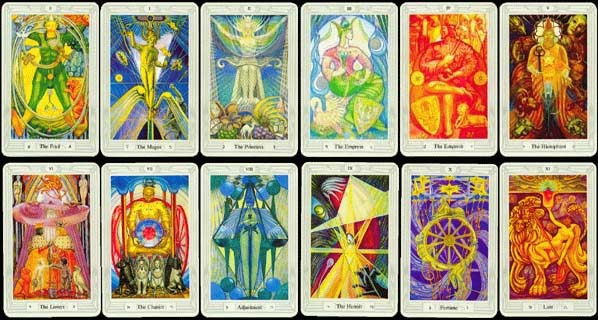
Tarot Passages

No Comments »

January 28th, 2010 Posted 9:08 pm

This is a great site that compares the tarot decks that are out there….

Tarot Passages

COURT DISCOVERS SIXTH AMENDMENT

No Comments »

August 2nd, 2009 Posted 3:08 pm

Washington City Paper – With crack and marijuana stashed in his pocket, Kenneth Millard and some friends scattered when an unmarked police car rolled into the parking lot outside his apartment building in Southeast. The cops were looking for someone else, but Millard fell into the trap.

After bolting through a cut in the woods and stumbling down a steep hill, Millard bounced off the side of another police car blocking his escape route. He dodged and weaved down Jasper Road SE until two officers tackled and cuffed him on the pavement. Police said a Colt .22 handgun, loaded with 11 rounds, flew out of Millard’s waistband during the chase and landed near a manhole.

When officers caught Millard that February night in 2005, they found 10 plastic bags filled with crack cocaine and marijuana in the right front pocket of his coveralls, according to court records. Millard’s lengthy rap sheet was growing longer, and he was heading back to jail.

At his trial in 2006, the jury convicted Millard on five drug and firearm charges, and the judge sentenced him to four-and-a-half years in prison.

But he just caught a break.

The D.C. Court of Appeals has reversed all of Millard’s convictions, wiping them off his record with a unanimous decision in March.

After overturning one of its own earlier precedents, the highest court in the District has reversed convictions in at least 14 cases involving drug dealers and others caught with drugs. The reversals hinge on an important constitutional issue stemming from eight words tucked in the Sixth Amendment known as the Confrontation Clause. In all criminal prosecutions, the accused has the right “to be confronted with the witnesses against him.”

In Millard’s case, the “missing” witness was a chemist from the Drug Enforcement Administration whose drug analysis report stated that the baggies in Millard’s pocket contained cocaine and marijuana. Because the analyst didn’t appear in court, Millard’s drug convictions were reversed, but the firearm convictions were tossed out, too, because of weak evidence and their connection to the drug case.

The legal fight playing out in D.C. will be spreading across the nation after a Supreme Court decision in June in a case with striking similarities to Millard’s. The 5-4 ruling in Melendez-Diaz v. Massachusetts could result in thousands of reversed convictions and dismissed drug, drunken-driving, and other charges, creating the potential for chaos in the justice system.

WORD UP!!!! -Written By Regina Brett, 90 years old, of The Plain Dealer, Cleveland , Ohio

No Comments »

July 30th, 2009 Posted 3:44 pm

“To celebrate growing older, I once wrote the 45 lessons life taught me. It is the most-requested20column I’ve ever written.”

My odometer rolled over to 90 in August, so here is the column once
more:

1. Life isn’t fair, but it’s still good.

2. When in doubt, just take the next small step.

3. Life is too short to waste time hating anyone.

4. Your job won’t take care of you when you are sick. Your friends and parents will. Stay in touch.

5. Pay off your credit cards every month.

6. You don’t have to win every argument. Agree to disagree.

7. Cry with someone. It’s more healing than crying alone.

8. It’s OK to get angry with God. He can take it.

9. Save for retirement starting with your first paycheck.

10. When it comes to chocolate, resistance is futile.

11. Make peace with your past so it won’t screw up the present.

12. It’s OK to let your children see you cry.

13. Don’t compare your life to others. You have no idea what their
journey is all about.

14. If a relationship has to be a secret, you shouldn’t be in it.

15. Everything can change in the blink of an eye. But don’t worry; God
never blinks.

16. Take a deep breath. It calms the mind.

17. Get rid of anything that isn’t useful, beautiful or joyful.

18. Whatever doesn’t kill you really does make you stronger.

19. It’s never too late to have a happy childhood. But the second one is
up to you and no one else.

20. When it com es to going after what you love in life, don’t take no
for an answer.

21. Burn the candles, use the nice sheets, wear the fancy lingerie.
Don’t save it for a special occasion. Today is special.

22. Over-prepare, then go with the flow.

23. Be eccentric now. Don’t wait for old age to wear purple.

24. The most important sex organ is the brain.

25. No one is in charge of your happiness but you.

26. Frame every so-called disaster with these words ‘In five years, will
this matter?’

27. Always choose life.

28. Forgive everyone everything.

29. What other people think of you is none of your business.

30. Time heals almost everything. Give time time.

31. However good or bad a situation is, it will change.

32. Don’t take yourself so seriously. No one else does.

33. Believe in miracles.

34. God loves you because of who God is, not because of anything you did or didn’t do.

35. Don’t audit life. Show up and make the most of it now.

36. Growing old beats the alternative — dying young.

37. Your children get only one childhood.

38. All that truly matters in the end is that you loved.

39. Get outside every day. Miracles are waiting everywhere.

40. If we all threw our problems in a pile and saw everyone else’s, we’d grab ours back.

41. Envy is a waste of time. You already have all you need.

42. The best is yet to come.

43. No matter how you feel, get up, dress up and show up.

44. Yield.

45. Life isn’t tied with a bow, but it’s still a gift.”

Quote of the Day:

No Comments »

July 22nd, 2009 Posted 11:30 am

“I have found strength where one does not look for it: in simple, mild, and pleasant people, without the least desire to rule—and, conversely, the desire to rule has often appeared to me a sign of inward weakness: they fear their own slave soul and shroud it in a royal cloak (in the end, they still become the slaves of their followers, their fame, etc.)” — Friedrich Nietzsche

Quote of the Day:

No Comments »

June 4th, 2009 Posted 12:44 pm

“This is my long-run forecast in brief: The material conditions of life will continue to get better for most people, in most countries, most of the time, indefinitely. Within a century or two, all nations, and most of humanity, will be at or above today’s Western living standards. I also speculate, however, that many people will continue to think and say that the conditions of life are getting worse.” — Julian Simon

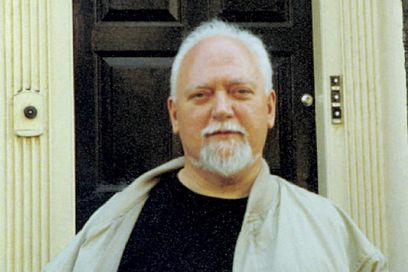
Robert Anton Wilson, 74, Who Wrote Mind-Twisting Novels, Dies

No Comments »

May 8th, 2009 Posted 9:41 pm

fortean_times_1100_7

Published: January 13, 2007

Robert Anton Wilson, an author of “The Illuminatus! Trilogy” — a mind-twisting science-fiction series about a secret global society that has been a cult classic for more than 30 years — died on Thursday at his home in Capitola, Calif. He was 74.

His death was confirmed by his daughter Christina Pearson.

The author of 35 books on subjects like extrasensory perception, mental telepathy, metaphysics, paranormal experiences, conspiracy theory, sex, drugs and what he called quantum psychology, Mr. Wilson wrote the trilogy with his friend Robert J. Shea in the late 1960s, when both were editors at Playboy. The books — “The Eye in the Pyramid,” “The Golden Apple” and “Leviathan” — were all published in 1975 by Dell Science Fiction. They never hit the best-seller lists, but have never gone out of print. Mr. Shea died in 1994.

Inspired by a thick file of letters that the authors received from conspiracy buffs, the trilogy traces the conflict between the Illuminati and the Discordians. The Illuminati are elite authoritarians who pull the puppet strings of the world’s political establishment while seeking to become super-beings by sucking the souls from the masses. The Discordians resist through convoluted tactics that include a network of double agents.

“There are lots of drug references in the book,” said Mark Frauenfelder, a co-editor of boingboing.net, a pop culture Web site that started as a print magazine in the 1980s and for which Mr. Wilson wrote many articles. “In part because it dealt with conspiracies in a science-fiction way, the trilogy achieved a cult following among science fiction readers, hippies, the psychedelic crowd.”

Mr. Wilson was born in Brooklyn on Jan. 18, 1932. He attended Brooklyn Polytechnical College and New York University. He worked as an engineering aide, a salesman and a copywriter, and was an associate editor at Playboy from 1965 to 1971.

Besides his daughter Christina of Santa Cruz, Calif., Mr. Wilson is survived by another daughter, Alexandra Gardner of Eugene, Ore., and a son, Graham, of Watsonville, Calif. His wife of 39 years, the former Arlen Riley, died in 1999.

After completing the trilogy, Mr. Wilson began writing nonfiction books. Perhaps his most famous is “Cosmic Trigger” (Pocket Books, 1977), a bizarre autobiography in which, among many other tales, he describes episodes when he believed he had communicated with extraterrestrials — while admitting that he was experimenting with peyote and mescaline.

Mr. Wilson contended that people should never rule out any possibility, including that lasagna might fly. On Jan. 6, in his last post on his personal blog, he wrote: “I don’t see how to take death seriously. I look forward without dogmatic optimism, but without dread. I love you all and I deeply implore you to keep the lasagna flying.”

Quotes to learn by….. Martin Luther King

No Comments »

February 25th, 2009 Posted 7:29 pm

king
‘The limitation of riots, moral questions aside, is that they cannot win and their participants know it. Hence, rioting is not revolutionary but reactionary because it invites defeat. It involves an emotional catharsis, but it must be followed by a sense of futility.’

Martin Luther King